
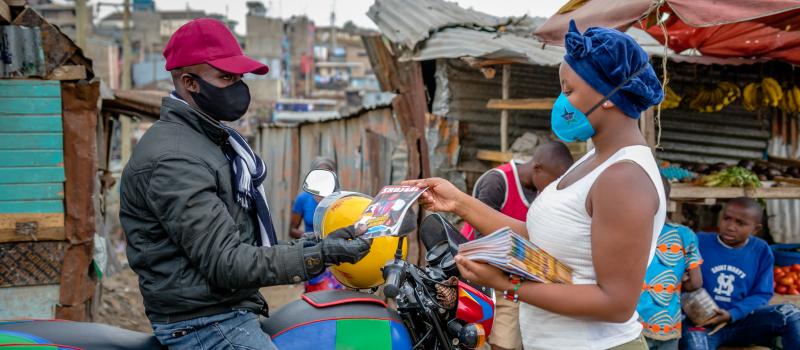
TOWARD RESILIENT LIVELIHOODS, FOOD SECURITY AND NUTRITION FOR ALL: GENDERED IMPACTS OF COVID-19
by Elizabeth Bryan, Muzna Alvi, Prapti Barooah, Shweta Gupta and Claudia Ringler, IFPRI
More than a year into the crisis, the COVID-19 pandemic and associated lockdowns continue to have devastating effects around the globe, including in rural areas of developing countries, where farmers’ agricultural inputs, sale of output and food security are affected by lockdowns, shortages and higher prices, and migrating family members lost their jobs and income opportunities. While the overall impacts are becoming clear, less attention has been paid to the differential impacts on men and women and their ability to cope with the multiple shocks associated with the pandemic. New research from the International Food Policy Research Institute's (IFPRI’s) Gender, Climate Change and Nutrition Integration Initiative (GCAN) team sheds light on the gendered impacts of COVID-19, based on panel phone survey data collected in seven Feed the Future countries: Ghana, Kenya, Nepal, Niger, Nigeria, Senegal and Uganda. In each country, data were collected from men and women in rural areas on the direct and indirect impacts of the pandemic, such as income loss and food insecurity, as well as coping responses used to address income losses.
The results show that income shocks due to the pandemic are also pervasive in rural areas. Both men and women respondents reported that their own income was affected by COVID-19. The trends varied across countries in terms of when income losses were most severe. Most respondents reported that their households were more affected by income losses closer to the start of the pandemic, when households were scrambling to adjust to new economic realities. As the pandemic wore on, income losses seem to have subsided to some degree as conditions allowed households to resume economic activities or livelihood activities were adjusted following the initial shock. However, new COVID-19 waves in many low- and middle-income countries (LMICs) will likely affect incomes more dramatically again as we move further into 2021.
The share of both men and women reporting that their own income was affected was high across many countries, except in Nepal and Niger, where men were more likely than women to report income losses (see figure 1). Income loss trends also varied by gender. In some countries — Ghana, Nepal, Nigeria and Uganda — women were more likely to report income losses in earlier survey rounds compared to later ones, mirroring the overall trend. However, in the other countries (Kenya, Niger and Senegal), the share of women reporting income losses increased in later rounds, with late surge cases. Read full article here